Why Homeschool?
The first step to homeschooling is making your decision to home educate your child. It is important to become informed and knowledgeable about some of the main concerns you may have. Explore these areas of our website to learn more about the initial decision to homeschool.
Making Your Decision
The reasons people decide to educate their children at home are varied and can be unique to each family. Some look towards a better educational experience, others are concerned with moral and social issues, some are concerned with safety, and still others have special needs that they wish to address. Explore these reasons and others that have led families to homeschooling.
Advantages
Ask anyone who loves homeschooling what the advantages are, and you'll probably hear a long list of the benefits of educating children in the home. Homeschooling is a journey and an adventure, with benefits and rewards for the entire family. Come find out what these advantages are and decide if homeschooling is right for you.
Teaching Your Own
Are you qualified to teach your own children? The answer is yes! It is challenging, but rewarding, to educate your children in your home. Find out what these challenges are and how to address them.
Socialization
"But what about socialization?" So the typical question goes to anyone who homeschools. Find out what socialization means to homeschooling families and strategies to engage your children and your entire family in social activities and connections.
Research & Statistics
Learn about current research and statistics involving homeschooling families, the homeschool movement, and the educational system.
Public School Issues
Many parents are basing part of their decision to homeschool on issues with public schooling, from bullying to poor academic performance to problems with governmental control.
Community Outreach
Want to help homeschooling integrate into the community at large? Are you a homeschool group leader who talks with the media or provides information to new and curious homeschoolers? Here are tips to help you present homeschooling to the public and the media.
What's Popular
How the Media Gets It Wrong About Homeschooling
Homeschoolers have gotten their share of bad coverage in the media and in popular culture in the last few years. The publicity on homeschooling runs from atrocious mischaracterization to humorously stereotypical.
Government Schooling Comes to America: The Origins of Government Schooling in the United States
The first step in understanding the state of education today is to review how government came to be the dominant force behind schooling in the United States. From the outset of the first settlements in the New World, Americans founded and successfully maintained a decentralized network of schools through the 1850s. Then, beginning in New England, a wave of change swept across the country, which soon saw states quickly abandoning the original American model of decentralized, private education i...
Number of Homeschooled Students in West Virginia 2006-2007
The West Virginia Home Educators Association has compiled statistics provided by the West Virginia Department of Education on the number of homeschoolers in each county by grade level for the school year 2006-2007.
Homeschooler Socialization: Skills, Values, and Citizenship
Robert Kunzman takes a look at the research surrounding homeschooling and socialization by asking some fundamental questions: What does it mean to be properly socialized? Which values are important to learn, and how should that occur? What role should parents, peers, and the broader society play in the process of socialization? 
Estimated Number of Homeschooled Students in the United States - 2003
Both the number and the proportion of students in the United States who were being homeschooled increased between 1999 and 2003. Approximately 1.1 million students (1,096,000) were being homeschooled in the United States in the spring of 2003, an increase from the estimated 850,000 students who were being homeschooled in the spring of 1999. In addition, the percentage of the entire student population who were being homeschooled increased from 1.7 percent in 1999 to 2.2 percent in 2003.
The Inmates Are Running the Asylum
A veteran teacher talks about her experience as a substitute teacher. Full of anecdotes, this article illustrates the state of classrooms today. She concludes that if she had school aged children, she would not place them in public schools, but would choose to homeschool them.
Lessons from Homeschooling
Americans are increasingly aware that government education specialists in charge of K-12 government schools are lousy educators. This awareness is prompting parents to act rationally in a way that provides the best evidence yet that education bureaucrats cannot educate namely, more and more parents are homeschooling their children.
Number of Homeschooled Students in West Virginia 2003-2004
The West Virginia Home Educators Association has compiled statistics provided by the West Virginia Department of Education on the number of homeschoolers in each county by grade level for the school year 2003-2004.
Number of Homeschooled Students in West Virginia 2004-2005
The West Virginia Home Educators Association has compiled statistics provided by the West Virginia Department of Education on the number of homeschoolers in each county by grade level for the school year 2004-2005.
Number of Homeschooled Students in West Virginia 2002-2003
The West Virginia Home Educators Association has compiled statistics provided by the West Virginia Department of Education on the number of homeschoolers in each county by grade level for the school year 2002-2003.
Product Reviews on Homeschool Blogs: How to Get Them
How to get bloggers interested in your products so that they will write product reviews on their homeschool blogs -- have an outstanding product first of all and give bloggers incentives. Find social media savvy homeschool bloggers on Twitter and G+ using two special hashtags.
The Ultimate Guide to Homeschooling Socialization
For homeschoolers, the issue of socialization is not really an issue at all. The truth is that homeschooled children not only have more opportunities for socialization, but they also experience more diversity in those experiences. If you're concerned about how to manage socialization as you homeschool, this article offers some insight and great strategies. 
Homeschooling For Dummies
This comprehensive guide gets you off to a great start. From helpful advice on how to decide if homeschooling is right for you, to how to get started, to complying with all legal requirements, you'll find what you need at the beginning of your homeschooling. Also included are teaching tips, advice on networking, testing, curriculum, and more. 
Number of Homeschooled Students in West Virginia 2005-2006
The West Virginia Home Educators Association has compiled statistics provided by the West Virginia Department of Education on the number of homeschoolers in each county by grade level for the school year 2005-2006.
Why the Future of Education is Unschooling
According to John Holt, unschooling allows children the freedom to learn in the world on their own terms. He saw no distinction between learning and living a meaningful life. Learning is a natural process and works best when integrated into the spaces and activities of everyday life. This article takes a look at some of John Holt's philosophy of education and explains why unschooling is often the very best choice of educational model. 
Resources
Dumbing Us Down: The Hidden Curriculum of Compulsory Schooling
This radical treatise on public education has been a New Society Publishers' bestseller for 10 years! Thirty years of award-winning teaching in New York City's public schools led John Gatto to the sad conclusion that compulsory governmental schooling does little but teach young people to follow orders as cogs in the industrial machine. In celebration of the ten-year anniversary of Dumbing Us Down and to keep this classic current, we are renewing the cover art, adding new material about John and the impact of the book, and a new Foreword.
Should I Home School?: How to Decide What's Right for You & Your Child

Have questions about homeschooling? This book has the answers. The information in this book will help you decide if homeschooling is right for you and your child. 

A Different Kind of Teacher: Solving the Crisis of American Schooling
In 1991, shortly after receiving both the New York State and New York City Teacher of the Year Awards, John Gatto resigned to begin a new career as an education reform advocate. In this collection of 16 essays, Gatto analyzes the problems of American education and suggests solutions for revitalizing the system — prescriptions that run counter to current trends.
But What About Socialization? Answering the Perpetual Home Schooling Question: A Review of the Literature
This book by Dr. Susan A. McDowell  uses research, statistics, and the experiences of homeschooling families to answer questions and counter myths about homeschooling and socialization. Read through a discussion of the multiple meanings of socialization, what parents, leaders, and children have to say about the issue, and what the research shows. 
Why We Homeschool

It is a common misconception that most parents homeschool due to bullies, school shootings, or bad teaching content. While these things are important, there is a higher purpose for choosing to home education your children. Even if all those things were corrected, there are stronger reasons to stay committed to the homeschool model. So why do you homeschool? This book looks at the meaning and significance of a true Christian education. 

The Homeschooling Revolution
A readable, scholarly overview of the modern day homeschooling movement. Includes vignettes from homeschooling families, war stories, research information, media reaction, footnotes, and statistics.
Homeschool Bravely: How to Squash Doubt, Trust God, and Teach Your Child with Confidence

It's time to change your perspective to transform the way you plan, teach, and homeschool. This book helps you to see homeschooling as a calling. With this mindset, you'll be able to dismiss the stress of impossible expectations. Find strategies to help you juggle the logistics of homeschooling with different ages, be a good support for a struggling learner, set realistic goals, dismiss the guilt, and weather any criticism. You can be a hopeful homeschooler! God uses all for good and can transform all of your stress, fears, shortcomings, and successes to create the best plans for your family. 

They're Your Kids: An Inspirational Journey from Self-Doubter to Home School Advocate

For many people, their schooling was uncomfortable, tedious, and sometimes a waste of time and energy. This book offers the idea that the public school system is tragically flawed and that we are able to do better for our own children. Sam Sorbo, mom of three and wife of actor Kevin Sorbo, took the leap into homeschooling and found the joy and success she was seeking. Included are strategies for working parents, those who are scared to take the leap, and anyone who wants the best for their children. 

Kingdom of Children : Culture and Controversy in the Homeschooling Movement (Princeton Studies in Cultural Sociology)

More than one million American children are schooled by their parents. As their ranks grow, home schoolers are making headlines by winning national spelling bees and excelling at elite universities. The few studies conducted suggest that homeschooled children are academically successful and remarkably well socialized. Yet we still know little about this alternative to one of society's most fundamental institutions. Beyond a vague notion of children reading around the kitchen table, we don't know what home schooling looks like from the inside.

Sociologist Mitchell Stevens goes behind the scenes of the homeschool movement and into the homes and meetings of home schoolers. What he finds are two very different kinds of home education--one rooted in the liberal alternative school movement of the 1960s and 1970s and one stemming from the Christian day school movement of the same era. Stevens explains how this dual history shapes the meaning and practice of home schooling today. In the process, he introduces us to an unlikely mix of parents (including fundamentalist Protestants, pagans, naturalists, and educational radicals) and notes the core values on which they agree: the sanctity of childhood and the primacy of family in the face of a highly competitive, bureaucratized society.

Kingdom of Children aptly places home schoolers within longer traditions of American social activism. It reveals that home schooling is not a random collection of individuals but an elaborate social movement with its own celebrities, networks, and characteristic lifeways. Stevens shows how home schoolers have built their philosophical and religious convictions into the practical structure of the cause, and documents the political consequences of their success at doing so.

Ultimately, the history of home schooling serves as a parable about the organizational strategies of the progressive left and the religious right since the 1960s.Kingdom of Children shows what happens when progressive ideals meet conventional politics, demonstrates the extraordinary political capacity of conservative Protestantism, and explains the subtle ways in which cultural sensibility shapes social movement outcomes more generally.

The Exhausted School: Bending the Bars of Traditional Education
These 13 essays, presented at the 1993 National Grassroots Speakout on the Right to School Choice, illustrate how education reform actually works. Written by award-winning teachers and their students, these essays present successful teaching methods that work in both traditional and nontraditional classroom settings. “Gatto’s voice is strong and unique.” — Thomas Moore, author of Care of the Soul
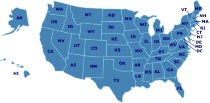
Looking for Another State?
Featured Resources

As an Amazon Associate, we earn from qualifying purchases. We get commissions for purchases made through links on this site.

H. A. Guerber's Histories
Helene A. Guerber wrote histories for grammar school children in the 19th century. Published in 1896 by the American Book Company, ‘Guerber’s Historical Readers in the Eclectic Readings Series’ were used to introduce children to the histories of the ...
Kinder Dolls: A Waldorf Doll-Making Handbook
This comprehensive guide for beginners and experienced doll makers shows how to create many different kinds of handcrafted dolls from natural materials. Handmade dolls with their simplicity of expression and design leave children’s imaginations ...
Safe Young Drivers: A Guide for Parents and Teens
Sixteen is by far the most dangerous age on the road. A 16-year-old is twelve times more likely than older drivers to die in a crash as a single occupant. Put two young teens in a vehicle, and the odds of death and injury nearly double. Despite these...
Tomorrows Child
Tomorrow's Child magazine offers insights and information that helps parents to feel confident that Montessori will prepare their children for the real world. It will help you understand and appreciate Montessori and apply it in your home.
For the Good of the Earth and Sun: Teaching Poetry
For the Good of the Earth and Sun is for teachers at all levels, especially for those teachers who feel anxious about introducing poetry to students. Georgia Heard offers a method of teaching poetry that respects the intelligence of students and teac...